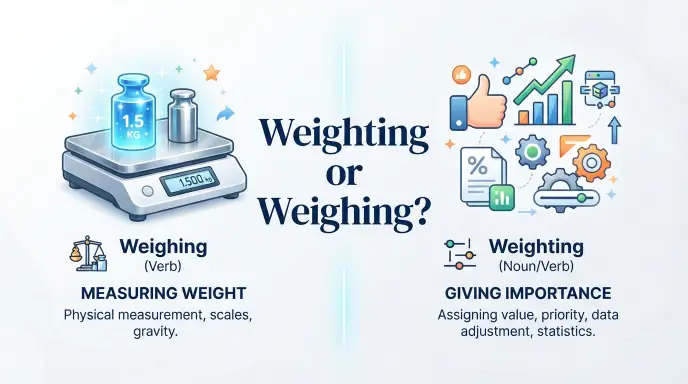
“Weighing” is the correct spelling when you mean measuring how heavy something is; “weighting” is a different word with a different meaning. This small spelling difference often confuses English learners because both words come from the noun
Weight and sound very similar. People commonly search for “weighting or weighing” when writing about measuring body weight, checking the weight of an object, or describing how much importance is given to something. The key is to understand the meaning before choosing the spelling.
Weighing is the present participle of weigh, meaning to measure weight. For example, “She is weighing the package.” Weighting, however, comes from weight and usually means giving different levels of importance, influence, or statistical value to something. For example, “The study uses weighting to adjust the results.”
This guide explains the difference between weighting and weighing, their meanings, origins, spelling, common mistakes, and everyday uses. You will also see simple examples to help you choose the correct word confidently.
Quick Answer weighting or weighing
Weighing is correct when you mean measuring weight.
Weighting is correct when you mean giving something a particular importance, influence, or statistical value.
Quick Examples
- Weighing: “I am weighing the apples.”
- Weighting: “The survey uses weighting to balance the results.”
- Weighing: “The nurse is weighing the baby.”
- Weighting: “Experience has a higher weighting in the selection process.”
Simple Rule
Weighing = measuring weight
Weighting = assigning importance or value
Definition and Meaning of Weighting or Weighing
Meaning of Weighing
Weighing means measuring how heavy a person, animal, object, or substance is.
It comes from the verb weigh.
Example:
“The shopkeeper is weighing the vegetables.”
Here, the shopkeeper is measuring their weight.
Meaning of Weighting
Weighting means giving something more or less importance, influence, or value compared with other things.
It is often used in statistics, research, education, finance, and decisionifmaking.
Example:
“The final score uses weighting for each section.”
This means different sections have different levels of importance.
Context and Usage
The two words are used in different situations:
| Word | Meaning | Example |
| Weighing | Measuring weight | “He is weighing the box.” |
| Weighting | Giving importance or statistical value | “The model uses data weighting.” |
The easiest way to remember the difference is to focus on the action.
If something is being measured, use weighing.
If something is being given importance or influence, use weighting.
The Origin of Weighting or Weighing

The words weighing and weighting are related to the word weight, but they developed through different grammatical forms.
Weigh is an old English verb connected with the idea of determining the heaviness of something. Its history can be traced back to Old English forms related to weight and measurement.
Weighing is formed by adding ifing to the verb weigh.
- weigh → weighing
- weigh + ing → weighing
Weighting is formed from the noun weight or the related verb weight, meaning to assign weight or importance.
- weight → weighting
- weight + ing → weighting
The extra t in weighting is therefore meaningful. It is not simply an alternative spelling of weighing.
British English vs American English Spelling
There is no major BritishifAmerican spelling difference between weighing and weighting.
Both British English and American English normally use:
- weighing
- weighting
The difference is therefore mainly about meaning, not regional spelling.
Examples
British English:
“The technician is weighing the material.”
American English:
“The technician is weighing the material.”
Both sentences use the same spelling.
Comparison Table
| Feature | British English | American English |
| Measuring weight | Weighing | Weighing |
| Assigning importance | Weighting | Weighting |
| Different spelling? | No | No |
| Main difference | Meaning and context | Meaning and context |
So, unlike words such as colour/color or organise/organize, weighing and weighting do not normally change spelling between British and American English.
Which Spelling Should You Use?
Your choice depends on what you want to say.
Use “Weighing” When:
You are talking about measuring weight.
Examples:
- “I am weighing the luggage.”
- “The doctor is weighing the child.”
- “We are weighing the ingredients.”
Use “Weighting” When:
You are talking about importance, influence, or statistical adjustment.
Examples:
- “The test gives weightage to practical skills.”
- “The researchers applied weighting to the survey data.”
- “Price has a higher weighting in the final decision.”
For US Readers
Use weighing for measurement and weighting for assigned importance.
For UK and Commonwealth Readers
Use the same distinction. The spelling is generally identical.
For Global English
The safest approach is to choose the word based on meaning, rather than trying to choose a British or American spelling.
Common Mistakes with Weighting or Weighing
Mistake 1: Using “Weighting” for Measurement
Incorrect:
“I am weighting the package.”
Correct:
“I am weighing the package.”
When you measure how heavy something is, use weighing.
Mistake 2: Removing the “t” from “Weighting”
Incorrect:
“The survey uses weighing to adjust the data.”
Correct:
“The survey uses weighting to adjust the data.”
In statistical contexts, weighting is the correct term.
Mistake 3: Treating Them as Spelling Variants
Incorrect idea:
“Weighing and weighting are two spellings of the same word.”
They are not. They have different meanings.
Mistake 4: Confusing “Weight” and “Weigh”
Remember:
- Weight = a noun or a related verb
- Weigh = a verb meaning to measure weight
Example:
“The weight of the box is 10 kilograms.”
“Weigh the box before shipping it.”
Weighting or Weighing in Everyday Examples
In Emails
Weighing:
“We are weighing each package before shipment.”
Weighting:
“The final evaluation includes weighting for customer feedback.”
In News
Weighing:
“Officials are weighing the evidence.”
Here, weighing can also mean carefully considering something.
Weighting:
“The survey results were adjusted using statistical weighting.”
On Social Media
Weighing:
“I’m weighing my luggage before the flight.”
Weighting:
“The scoring system uses different weighting for each category.”
In Formal Writing
Weighing:
“The laboratory is weighing the samples.”
Weighting:
“The researchers used statistical weighting to improve the analysis.”
An Important Extra Meaning of “Weighing”
Weighing can also mean considering something carefully.
For example:
“The committee is weighing its options.”
Here, nobody is measuring physical weight. The word means carefully considering different choices.
Weighting or Weighing : Google Trends & Usage Data
Search interest for “weighting or weighing” is generally connected to two different types of questions.
People searching for weighing often want help with:
- Measuring body weight
- Weighing food
- Weighing luggage
- Weighing packages
- Grammar and spelling
People searching for weighting often encounter the word in:
- Statistics
- Surveys
- Research
- Education
- Finance
- Data analysis
The terms are therefore used in different contexts rather than competing as simple spelling alternatives.
Search behavior can also vary by country and professional field. Weighing is common in everyday situations, while weighting is more specialized and frequently appears in technical or academic contexts.
Because search popularity changes over time, Google Trends figures should be checked for a specific country, date range, and search category before drawing conclusions about current usage.
Weighting vs Weighing Comparison Table
| Variation | Correct? | Meaning | Example |
| Weighing | Yes | Measuring weight | “She is weighing the fruit.” |
| Weighting | Yes | Assigning importance or value | “The survey uses weighting.” |
| Weigh | Yes | Measure weight | “Weigh the package.” |
| Weight | Yes | Amount of heaviness | “The weight is 5 kg.” |
| Weighting for measurement | No | Wrong usage | “I am weighting the box.” |
| Weighing for statistical adjustment | Usually no | Wrong word for this meaning | “The data needs weighing.” |
FAQs About Weighting or Weighing
1. Is it “weighting” or “weighing”?
Weighing means measuring weight. Weighting means assigning importance, influence, or statistical value.
2. Is “weighting” a real word?
Yes. Weighting is a correct English word. It is commonly used when different factors are given different levels of importance.
3. Is “weighing” a real word?
Yes. Weighing is the ifing form of weigh. It means measuring weight or, in some contexts, carefully considering something.
4. Do British and American English spell these words differently?
No. Both normally use weighing and weighting. The difference is based on meaning, not British versus American spelling.
5. How do you remember the difference between weighing and weighting?
Think of weighing as an action involving a scale or measurement. Think of weighting as giving something a particular level of importance or influence.
6. Can “weighing” mean considering something?
Yes. For example, “The team is weighing its options” means the team is carefully considering its choices.
7. Which is correct: “weighting the package” or “weighing the package”?
Weighing the package is correct when you mean measuring its weight.
Conclusion
The difference between weighting and weighing becomes simple once you focus on meaning. Weighing is normally used when something is being measured for its physical weight. For example, you might be weighing luggage, food, a package, or a person. It can also mean carefully considering something, as in “weighing the options.”
Weighting, on the other hand, refers to giving something a particular level of importance, influence, or statistical value. It is especially common in research, surveys, statistics, education, and analytical writing.
There is no significant British English versus American English spelling difference between these two words. Both varieties use weighing and weighting. Therefore, the correct choice depends on the meaning you want to communicate.
A useful memory trick is simple: weighing = measuring or considering; weighting = assigning importance or value. Once you remember this distinction, choosing between weighting or weighing becomes much easier in everyday, academic, and professional writing.

Hi, I’m Dylan Foster. I’m a passionate writer who enjoys creating clear, helpful, and engaging content. My goal is to provide readers with simple answers and useful information on a wide range of topics.







2 thoughts on “Weighting or Weighing: Which Spelling Is Correct?”