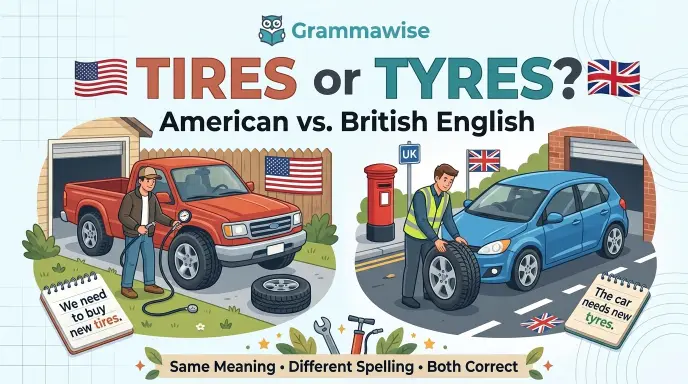
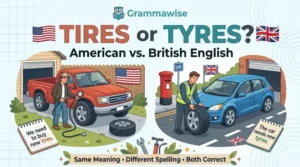
Have you ever wondered if to write tires or tyres? Both spellings are correct, but the right choice depends on where you live and who will read your writing. Tires is the standard American English spelling, while tyres is the standard British English spelling. Both words refer to the rubber coverings fitted around the wheels of cars, bikes, trucks, and other vehicles.
People often search for “tires or tyres” because they see both spellings online, in car manuals, and on shopping websites. This can cause confusion, especially when writing school assignments, blog posts, business emails, or product descriptions. The good news is that neither spelling is wrong when used in the right region.
In this guide, you will learn what tires and tyres mean, where these spellings came from, and how they differ across Englishifspeaking countries.
You will also find simple examples, common mistakes, and answers to frequently asked questions. if you write for an American, British, or global audience, this guide will help you choose the correct spelling and keep your writing clear and consistent.
Quick Answer: Tires or Tyres
The quick answer is simple: use tires in American English and tyres in British English.
Both spellings have the same meaning. They refer to the rubber covering around a vehicle’s wheel.
Examples:
- American English: I need new tires for my car.
- British English: I need new tyres for my car.
- American English: These tires are good for wet roads.
- British English: These tyres are good for wet roads.
Neither spelling is wrong. The best choice depends on your target audience. If you are writing for readers in the United States, choose “tires.” If your readers are in the United Kingdom, choose “tyres.”
Definition and Meaning of Tires or Tyres
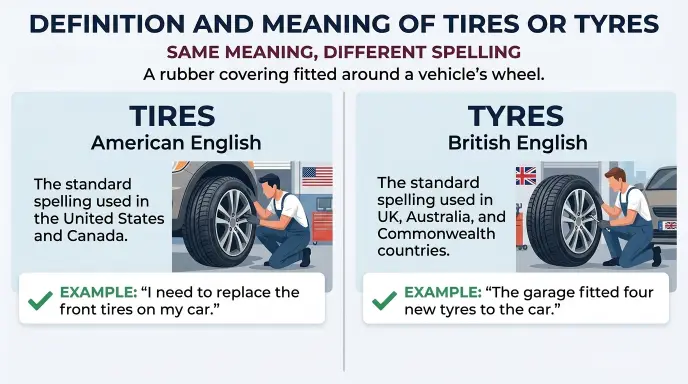
Both words describe the same vehicle part, and their meaning does not change with the spelling.
What Does Tires Mean?
Tires is the standard American English spelling of the plural noun “tire.” A tire is the rubber covering fitted around a wheel.
Tires help vehicles move smoothly and grip the road. They also help drivers steer, brake, and travel safely.
Examples:
- My car needs four new tires.
- These tires provide good grip on wet roads.
- The mechanic checked the tires before the trip.
In American English, “tire” can also be a verb meaning to become tired or make someone tired. For example, “Long walks tire me.”
What Does Tyres Mean?
Tyres is the standard British English spelling of the plural noun “tyre.” It has the same meaning as the American word “tires.”
Tyres are used on cars, buses, bicycles, motorcycles, and other vehicles.
Examples:
- The garage sells car tyres.
- Please check your tires before driving.
- These tires need more air.
In British English, “tyre” refers to the vehicle part, while “tire” is still used as a verb meaning to become tired or cause tiredness.
Context and Usage
The spelling depends on the type of writing and the audience.
Use “tires” when writing for American readers. Use “tyres” when writing for British readers. The same rule usually applies to product pages, car repair guides, and vehicle maintenance articles.
For example, an American store may advertise “winter tires,” while a British store may advertise “winter tyres.”
The meaning stays the same in both cases.
The Origin of Tires or Tyres
The spelling difference developed over time as American and British English followed different spelling conventions.
The word “tire” has a long history in English. It is linked to the word “attire,” which once referred to equipment or fittings. The word later became associated with the covering around a wheel.
The spelling “tyre” became established in British English, while “tire” became the usual spelling in American English.
Over time, dictionaries, publishers, businesses, and vehicle manufacturers helped make these regional forms standard. Today, both spellings are widely accepted in their respective varieties of English.
This is not a difference in meaning or pronunciation. It is mainly a difference in spelling.
For example:
- American English: The mechanic replaced my tires.
- British English: The mechanic replaced my tyres.
Both sentences are correct. The choice reflects the English style used by the writer.
British English vs American English Spelling
American and British English use different spellings for this word, but the meaning and pronunciation are generally the same.
The main difference is the letter sequence used in the noun referring to a vehicle’s wheel covering.
| Feature | American English | British English |
| Singular | Tire | Tyre |
| Plural | Tires | Tyres |
| Example | New car tires | New car tyres |
| Common context | US car shops | UK car shops |
| Meaning | Rubber wheel covering | Rubber wheel covering |
| Correct usage | US writing | UK writing |
Examples in American English
American writers use “tire” for one wheel covering and “tires” for more than one.
- My front tire is flat.
- I bought four new tires.
- These tires are made for snow.
- The tire shop is near my home.
These spellings are standard in American books, websites, and vehicle advertisements.
Examples in British English
British writers use “tyre” for one wheel covering and “tyres” for more than one.
- My front tire is flat.
- I bought four new tires.
- These tires are made for wet roads.
- The tire shop is near my home.
These forms are standard in British writing and are also common in many other countries that follow British English conventions.
Which Spelling Should You Use?
Choose the spelling that matches your readers, publication style, or location.
For American Readers
Use “tire” and “tires” when writing for people in the United States.
This spelling is best for American blogs, car repair websites, product listings, school assignments, and business documents.
Example: “Find the best tires for your SUV.”
For British and Commonwealth Readers
Use “tyre” and “tyres” when writing for readers in the United Kingdom. This spelling is also common in countries such as Australia and New Zealand.
Example: “Find the best tyres for your SUV.”
Follow the style guide used by your publication or organization if it has one.
For a Global Audience
If your website serves readers around the world, choose one spelling style and use it consistently.
For example, an Americaniffocused website should use “tires” throughout its articles. A Britishiffocused website should use “tyres.”
For Grammawise, the best approach is to match the spelling to the audience and search intent of each article. Consistent spelling helps readers understand your content and makes your writing look professional.
Common Mistakes with Tires or Tyres
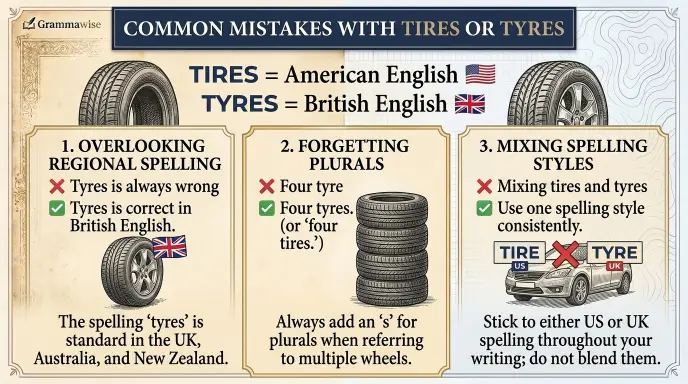
Most mistakes happen when writers mix American and British spelling or use the wrong form for one or more wheels.
Mistake 1: Mixing Both Spellings
Incorrect: My car has new tires, but the front tyres are old.
Correct in American English: My car has new tires, but the front tires are old.
Correct in British English: My car has new tyres, but the front tyres are old.
Use one spelling style throughout the same piece of writing.
Mistake 2: Using the Singular Form for More Than One
Incorrect: My car needs four tires.
Correct: My car needs four tyres.
Use “tyre” for one and “tyres” for more than one. In American English, use “tire” and “tires.”
Mistake 3: Thinking One Spelling Is Always Wrong
Incorrect: “Tyres” is always a spelling mistake.
Correct: “Tyres” is standard British English, while “tires” is standard American English.
Both forms are correct when used for the right audience.
Mistake 4: Confusing the Noun and Verb
The noun refers to a vehicle part. The verb “tire” means to become tired or make someone tired.
Examples:
- Noun: My tires need replacing.
- Verb: Long journeys tire me.
In British English, the vehicle part is spelled “tyre,” but the verb remains “tire.”
Tires or Tyres in Everyday Examples
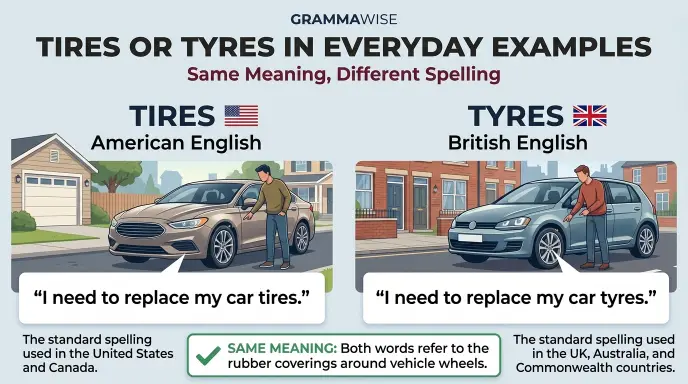
These examples show how to use each spelling in daily communication and professional writing.
In Emails
American English:
“Hello, I would like to book an appointment to replace my car tires. Please let me know your available times.”
British English:
“Hello, I would like to book an appointment to replace my car tyres. Please let me know your available times.”
In News Articles
American English: “Drivers are advised to check their tires before the winter season.”
British English: “Drivers are advised to check their tyres before the winter season.”
On Social Media
American English: “New tires make a big difference on long road trips!”
British English: “New tyres make a big difference on long road trips!”
In Formal Writing
American English: “Regular tire inspections can help improve road safety.”
British English: “Regular tyre inspections can help improve road safety.”
In Online Shopping
American English: “Shop for affordable allifseason tires.”
British English: “Shop for affordable allifseason tyres.”
Each example uses the spelling that matches its intended audience.
Tires or Tyres : Google Trends and Usage Data
Search interest can vary by country, language preference, and the type of information people need.
“Tires” is the usual search spelling in the United States, while “tyres” is the usual spelling in the United Kingdom. Australia and New Zealand also commonly use “tyres.”
People may search for these words when buying replacement parts, comparing brands, learning about vehicle safety, or finding a local repair shop.
Common related searches include:
- Best tires for cars
- Best tyres for wet roads
- Tire pressure guide
- Tyre replacement cost
- Winter tires vs allifseason tires
- How to check tyre pressure
Google Trends can help compare search interest for “tires” and “tyres” across countries and time periods. However, search interest is not the same as the total number of searches, and results depend on the selected location and time range.
Without a live Trends comparison, exact rankings or searchifvolume figures should not be assumed. For if, use the spelling that matches your target country and include relevant related terms naturally.
Tires vs Tyres : Comparison Table
This table summarizes the main differences and helps you choose the right spelling quickly.
| Word or Phrase | American English | British English |
| One wheel covering | Tire | Tyre |
| More than one | Tires | Tyres |
| Car replacement | New tires | New tyres |
| Winter product | Winter tires | Winter tyres |
| Pressure check | Tire pressure | Tyre pressure |
| Repair business | Tire shop | Tyre shop |
| Flat wheel covering | Flat tire | Flat tyre |
| Verb meaning to tire someone | Tire | Tire |
Remember that the noun changes spelling by region, but the verb “tire” keeps the same spelling in both varieties.
Questions About Tires or Tyres
Q1. Is it tires or tyres?
Both spellings are correct. “Tires” is standard American English, while “tyres” is standard British English. Both refer to the rubber covering around a vehicle’s wheel.
Q2. Why do Americans spell it tires?
American English uses “tire” for the vehicle part. This spelling became standard in the United States and is used in American dictionaries, car shops, and publications.
Q3. Is tyres British English?
Yes, “tyres” is the standard British English plural spelling. It is also common in other countries that follow British English spelling conventions, including Australia and New Zealand.
Q4. Do tires and tyres mean the same thing?
Yes, they have the same meaning when referring to vehicle wheel coverings. The difference is regional spelling, not meaning or pronunciation.
Q5. Which spelling should I use for if?
Use “tires” for content aimed at American readers and “tyres” for content aimed at British readers. Match your spelling to the country and search intent you want to target.
Q6. Is tire also a verb?
Yes. “Tire” can mean to become tired or make someone tired. For example, “Long walks tire me.” This verb spelling is used in both American and British English.
Q7. Should I use both tires and tyres in one article?
Usually, choose one spelling and use it consistently. You can mention the alternative spelling once when explaining regional differences or answering a specific search query.
Conclusion
The choice between tires and tyres depends on the type of English you use. Tires is the standard American English spelling, while tyres is the standard British English spelling. Both words refer to the same rubber covering fitted around a vehicle’s wheel, so neither spelling is wrong in its proper regional context.
If you are writing for readers in the United States, use “tire” and “tires.” If your audience is in the United Kingdom, Australia, or New Zealand, “tyre” and “tyres” are generally the better choices. For international websites, pick a style that suits your main audience and keep it consistent across headings, paragraphs, tables, and product descriptions.
For if, regional spelling matters because people often search using the form they see in their own country. Match your wording to the audience you want to reach, and use related terms naturally. Once you understand this simple difference, you can write about vehicle maintenance, car parts, and road safety with greater confidence.
The key takeaway: tires and tyres mean the same thing; the correct choice depends on your audience.

I’m James Mitchell, an English language and grammar writer at Grammwise. I enjoy helping readers understand confusing words, spelling differences, grammar rules, and everyday English usage. My goal is to make English simple, clear, and easy to use with practical examples and straightforward explanations.




1 thought on “Tires or Tyres: Which Spelling Is Correct?”