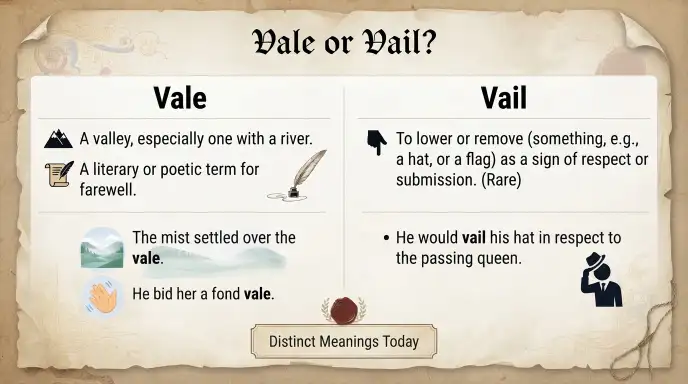
Vale and vail are both correct English words, but they have different meanings and uses. Choosing the right word depends on what you want to say. Many people search for “vale or vail” because.
these words sound alike but have different spellings and meanings. This can cause confusion when writing emails, stories, poems, or formal documents.
The word vale often refers to a valley, especially in poetry or place names. It can also be used as a farewell expression. In contrast, vail is a less common word that means to lower, remove, or bow something as a sign of respect. It may also appear in older English writing.
Understanding the difference between vale and vail can help you avoid spelling mistakes. It also makes your writing more accurate and easier to understand. In this guide, you will learn the definitions, origins, spelling rules, common mistakes, and everyday uses of both words. You will also find simple examples to help you choose the correct spelling.
Quick Answer : vale or vail
Vale is usually the correct word for a valley or a farewell expression. Vail is an uncommon word that means to lower or bow something as a sign of respect.
- Vale: The green vale was surrounded by hills.
- Vale: Vale, my dear friend. (A poetic farewell.)
- Vail: The knight did vail his banner in respect. (Archaic usage.)
If you are talking about a valley, use vale. If you mean lowering something as a gesture of respect, vail may be correct.
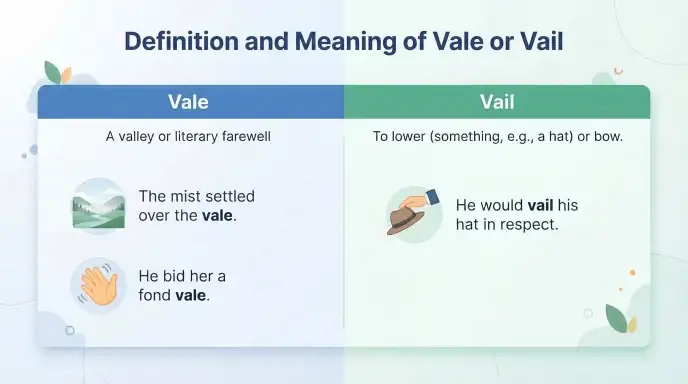
Definition and Meaning of Vale or Vail
What Does Vale Mean?
Vale is a noun that means a valley or a low area of land between hills or mountains. It is often used in literature, poetry, and place names.
Simple meaning: A valley.
Examples:
- The village rested in a peaceful vale.
- A river flowed through the green vale.
- The travelers crossed the vale before sunset.
Vale can also be used as a poetic word for farewell.
Example: Vale, old friend, until we meet again.
What Does Vail Mean?
Vail is a rare or oldiffashioned verb. It means to lower, bow, or remove something as a sign of respect or submission.
Simple meaning: To lower or bow in respect.
Examples:
- The soldier did vail his flag before the king.
- The knight chose to vail his sword.
In modern English, vail is uncommon. Writers usually choose words such as lower, bow, or remove instead.
Vale and Vail in Context
The meaning of each word depends on the sentence.
Word
Meaning
Example
Vale
A valley
The vale looked beautiful in spring.
Vale
A farewell expression
Vale, dear friend.
Vail
To lower or bow in respect
The knight did vail his banner.
The Origin of Vale or Vail
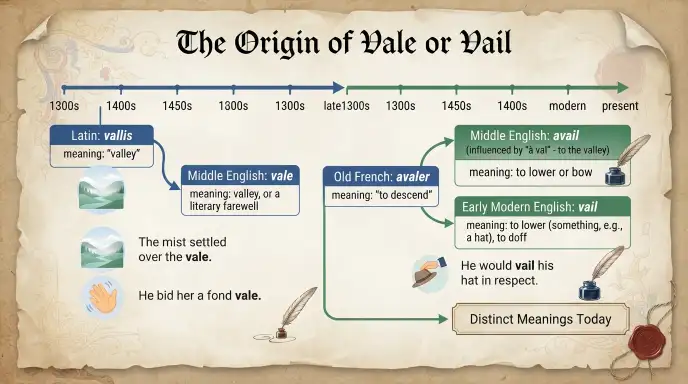
The word vale comes from Latin vallis, meaning “valley.” It entered English through Old French and became a literary term for a low area of land. Over time, it also appeared in poetry and place names.
The word vail has roots in Old French and Middle English. It developed from words connected with lowering or letting something fall. In older writing, it could describe lowering a hat, flag, or other object as a sign of respect.
The spelling differences exist because the words developed from different historical roots and acquired different meanings. Although they sound alike in many accents, they are not interchangeable.
British English vs American English Spelling
Both British and American English use vale and vail. There is no major spelling difference between the two varieties for these words.
Word
British English
American English
Meaning
Valley or farewell
To lower or bow
Low land between hills
Examples in both varieties:
- British English: The hikers walked through the vale.
- American English: The hikers walked through the vale.
- British English: The knight did vail his banner.
- American English: The knight did vail his banner.
However, vail is rare in both modern British and American English.
Which Spelling Should You Use?
Choose the spelling based on your intended meaning.
- For a valley: Use vale. Example: The peaceful vale was full of flowers.
- For a poetic farewell: Use vale. Example: Vale, my beloved friend.
- For an oldiffashioned act of respect: Use vail. Example: The knight did vail his sword.
- For modern writing: Use clearer words such as valley, goodbye, lower, or bow when appropriate.
For most everyday writing, vale is the word you are more likely to need. Use vail only when its historical meaning fits your sentence.
Common Mistakes with Vale or Vail
Writers often confuse these words because they sound similar. Here are some common mistakes and corrections.
Incorrect or confusing usage
Correct usage
Explanation
The green vail was beautiful.
The green vale was beautiful.
Use vale for a valley.
Vale your head in respect.
Vail your head in respect.
Vail can mean to lower or bow.
We crossed a vail between hills.
We crossed a vale between hills.
A valley is a vale.
Vale means to bow.
Vail can mean to bow.
The meanings are different.
Helpful tip: Remember that a valley is connected with a valley. The spelling vail is mainly found in older or specialized writing.
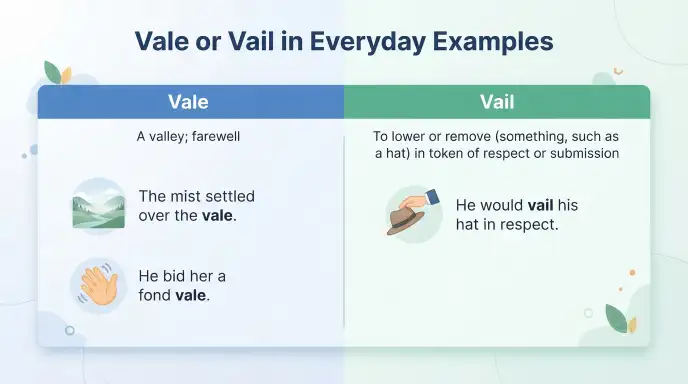
Vale or Vail in Everyday Examples
In Emails
- Vale: The hotel is located in a quiet vale.
- Vail: The word vail is rarely needed in a modern email.
In News Writing
- Vale: The report described a village in a remote vale.
- Vail: Historical reports may use vail when describing an act of respect.
On Social Media
- Vale: “A peaceful morning in the vale. 🌿”
- Vale: “Vale, summer. Welcome, autumn.”
In Formal Writing
- Vale: The poem describes a lonely vale surrounded by mountains.
- Vail: The historical text states that the knight did vail his banner.
Vale or Vail : Google Trends & Usage Data
Search interest in vale and vail can vary by country and context. Vale is used in literature, geography, poetry, and place names. Vail is much less common in modern general writing.
The word Vail may also appear in searches for proper names, such as Vail, a town in Colorado, United States. This can affect search results for the spelling.
Google Trends measures search interest rather than the total number of words used in writing. For that reason, search popularity does not always show which word is grammatically correct.
When comparing these words, consider:
- Vale: Valley, poetry, literature, and farewell expressions.
- Vail: Historical English and proper names.
- Country differences: Both spellings are recognized in British and American English.
Vale vs Vail : Comparison Table
Feature
nVale
Vail
Word type
Noun; interjection
nVerb
Main meaning
Valley
To lower or bow
Common today?
Sometimes used
Rare
Used in poetry?
Yes
Sometimes in older writing
Used in place names?
Yes
Yes, as a proper name
Example
A beautiful vale
Vail the banner
Modern alternative
Valley or farewell
Lower or bow
FAQs
Q1. What is the difference between vale and vail?
Vale usually means a valley or farewell, while vail is a rare verb meaning to lower or bow. They are different words with different meanings.
Q2. What is vail in Punjabi?
Vail is not a common English word in everyday Punjabi usage. Depending on context, it may be understood as ਝੁਕਣਾ (jhukna), meaning “to bow” or “to lower.”
Q3. What is value meaning?
Vale commonly means a valley, especially in literary or poetic English. It can also refer to a farewell or leaveiftaking in older usage.
Q4. What does “vail” mean?
Vail is an uncommon English verb meaning to lower, bow, or humble oneself. It is mostly found in older, literary, or historical contexts.
Q5. Is it Vail or vial?
Both Vail and vial are correct words, but they have completely different meanings. Vial means a small container for liquids, while Vail is a rare verb.
Q6. How to use Vail in a sentence?
A literary example is: “The knight chose to vail his head before the king.” Here, vail means to lower or bow.
Q7. What does “vial” mean?
A vial is a small bottle or container, usually used to hold medicine, chemicals, or other liquids. For example, “The nurse opened a vial of medicine.”
Q8. What does vail mean in the Bible?
In biblical or older religious English, vail can mean to lower, bow, or humble oneself. It may also appear in older translations with meanings connected to lowering or covering.
Conclusion
Vale and vail are two English words that sound similar but have different meanings. Vale usually refers to a valley, especially in poetry, literature, and place names. It can also express farewell in a formal or poetic way. Vail, on the other hand, is a rare and oldiffashioned verb that means to lower or bow something as a sign of respect.
Both spellings are accepted in British and American English, so the difference is not based on regional spelling rules. Instead, the meaning of the sentence determines which word you should choose. If you are describing a valley, vale is the correct choice. If you are writing about an old act of respect, vail may be suitable.
For everyday writing, choose clear and familiar words. Use valley instead of vale when you want a simple modern style, and use lower or bow instead of vail when appropriate. Knowing these differences will help you write with greater accuracy and confidence.

I’m James Mitchell, an English language and grammar writer at Grammwise. I enjoy helping readers understand confusing words, spelling differences, grammar rules, and everyday English usage. My goal is to make English simple, clear, and easy to use with practical examples and straightforward explanations.

2 thoughts on “Vale or Vail: Meaning, Spelling, and Key Differences”