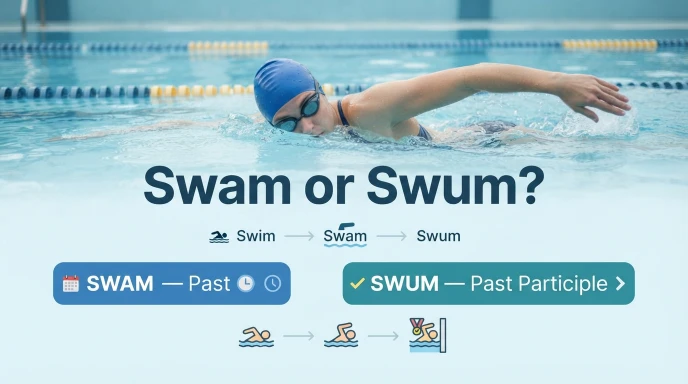
Swam and swum are both correct forms of the verb swim, but they are used in different ways. Many people search for swam or swum because both words describe swimming in the past. The key difference is their place in a sentence. Swam is the simple past tense. Swum is the past participle and usually needs a helping verb such as have, has, or had.
For example, you can say, “I swam in the lake yesterday.” However, you should say, “I have swum in that lake before.” Using the wrong form can make a sentence sound incorrect or unclear.
This guide explains the difference between swam and swum in simple terms. You will learn their meanings, history, grammar rules, common mistakes, and everyday uses. You will also see examples from emails, news, social media, and formal writing. By the end, you will know exactly when to use swam and when to use swum.
Quick Answe: Swam or Swum
Swam is the simple past form, while swum is the past participle of swim.
Use swam when talking about a completed action in the past:
- I swam yesterday.
- She swam across the pool.
- They swam in the ocean last summer.
Use swum with a helping verb such as have, has, or had:
- I have swum in this pool before.
- She has swum across the lake.
- They had swum for an hour before sunset.
A simple rule can help:
Swam = simple past
Swum = past participle
So, “I swam yesterday” is correct. “I have swum before” is also correct.
Definition and Meaning of Swam or Swum
Both words come from the verb swim, but grammar decides which form you need.
What Does Swam Mean?
Swam is the simple past tense of swim. It describes an action that happened in the past.
Examples:
- We swam at the beach.
- Alex swam five laps.
- I swam in the river last week.
The action is finished. You do not need a helping verb before swam.
What Does Swum Mean?
Swum is the past participle of swim. It normally appears with a helping verb.
Common helping verbs include:
- have
- has
- had
- have been
- has been
- had been
Examples:
- I have swum here before.
- She has swum every morning this week.
- They had swum across the river before the storm began.
Simple Meaning
The basic meaning of both words is related to moving through water by using your body.
The difference is grammatical:
| Word | Grammar | Example |
| Swam | Simple past | I swam yesterday. |
| Swum | Past participle | I have swum before. |
Context and Usage
The word swam often appears with a clear pastiftime expression.
Examples:
- yesterday
- last night
- last summer
- two days ago
- in 2025
Swum often appears when the sentence connects a past action with another time or experience.
Examples:
- I have swum here before.
- She has swum three miles today.
- He had swum before the race started.
The Origin of Swam or Swum
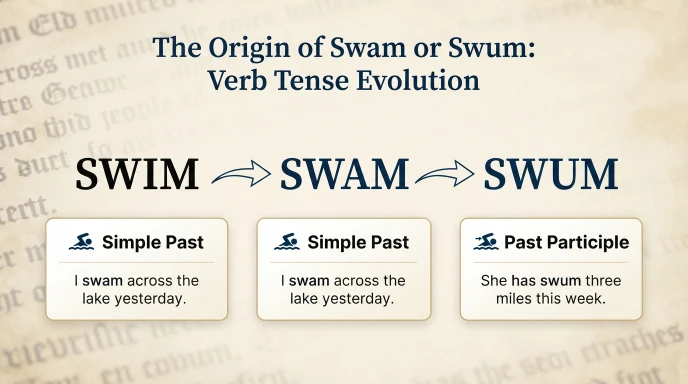
The words swam and swum have the same historical source: the verb swim.
The English verb swim comes from Old English swimman. It has been part of the English language for many centuries. Over time, English kept different forms of the verb for different grammatical uses.
The verb developed into an irregular verb with three main forms:
swim → swam → swum
These forms do not follow the regular pattern used by verbs such as walk or play.
For example:
- walk → walked → walked
- play → played → played
- swim → swam → swum
This is why learners often find swam or swum confusing.
The vowel changes from i to a to u. This pattern is also found in some other old English verbs.
For example:
- sing → sang → sung
- ring → rang → rung
- begin → began → begun
Therefore, swam and swum are not spelling variations. They are different grammatical forms of the same verb.
British English vs American English Spelling
British and American English use the same forms: swam and swum.
There is no major spelling difference between the two varieties of English. The important issue is grammar, not regional spelling.
British English
British English uses:
- swim
- swam
- swum
Examples:
- I swam in the sea yesterday.
- I have swum in the sea before.
American English
American English also uses:
- swim
- swam
- swum
Examples:
- I swam in the pool yesterday.
- I have swum in that pool before.
Comparison Table
| Form | British English | American English | Use |
| Swim | Yes | Yes | Present/base form |
| Swam | Yes | Yes | Simple past |
| Swum | Yes | Yes | Past participle |
The main rule is the same in both forms of English. Choose the form based on the grammar of your sentence.
Which Spelling Should You Use?
Choose swam or swum based on the sentence, not the country.
If you are writing for a US audience, use the same grammar rule. If you are writing for a UK, Australian, Canadian, or other Englishifspeaking audience, the rule remains the same.
Use swam for a completed past action:
She swam yesterday.
Use swum after have, has, or had:
She swam every day this week.
For global readers, these rules are clear and widely understood.
If you are unsure, check the helping verb. If the sentence contains have, has, or had, swum is often the correct choice.
Common Mistakes with Swam or Swum
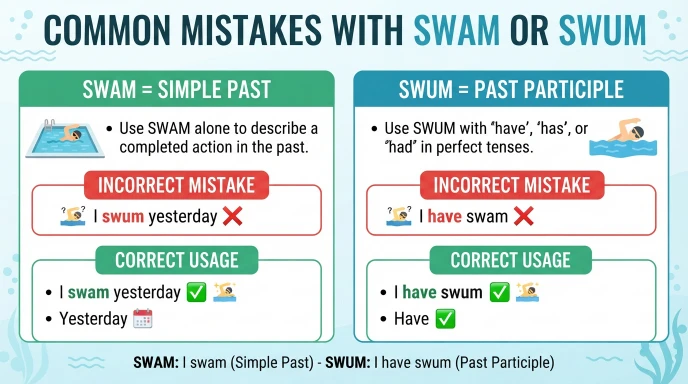
The most common mistake is using swam after have, has, or had.
Mistake 1: Using Swam After Have
Incorrect:
I have swam in this lake.
Correct:
I have swum in this lake.
Mistake 2: Using Swum Without a Helping Verb
Incorrect:
I swum yesterday.
Correct:
I swam yesterday.
Mistake 3: Confusing Past and Past Participle
Remember:
Simple past = swam
We swam last weekend.
Past participle = swum
We have swum there before.
Mistake 4: Using Swam After Had
Incorrect:
They had swam before lunch.
Correct:
They swam before lunch.
A useful memory trick is simple:
Yesterday → swam
Have/has/had → swum
Swam or Swum in Everyday Examples
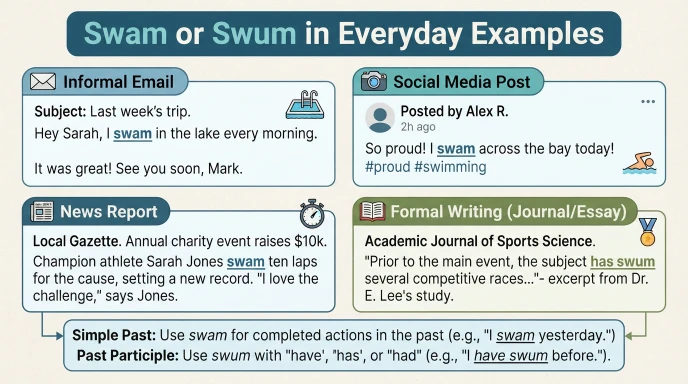
Both words appear often in everyday English, but their grammar stays the same.
In Emails
Swam:
I swam at the community pool yesterday.
Swum:
I have swum at this pool several times.
In News Writing
A news report may say:
The athlete swam across the river during the event.
For an experience or record, it may say:
The athlete has swum across the river several times.
On Social Media
People may write:
I swam five miles today!
Or:
I have swum in some amazing places.
Both can be correct. The sentence structure decides which form to use.
In Formal Writing
Formal writing follows the same grammar rules.
Simple past:
The researchers swam across the test area.
Past participle:
The researchers had swum across the area before the study ended.
The same distinction works in academic, business, and professional writing.
Swam or Swum : Google Trends & Usage Data
Search interest for swam or swum is usually linked to grammar questions and Englishiflearning needs.
People may search for this phrase when they are unsure about the past tense of swim. Students, writers, teachers, and English learners may all look up the difference.
Search interest can also vary by country and languageiflearning trends. Countries with large Englishiflearning communities may generate more searches for grammar questions. However, exact search popularity can change over time.
The search intent is usually clear: users want to know if swam or swum is correct.
The most useful distinction is:
- Swam = simple past
- Swum = past participle
This difference matters more than regional spelling because both British and American English use the same forms.
Swam and Swum Comparison Table
Here is a quick sideifbyifside guide.
| Feature | Swam | Swum |
| Base verb | Swim | Swim |
| Verb form | Simple past | Past participle |
| Used alone as past tense | Yes | No |
| Used with have | No | Yes |
| Used with has | No | Yes |
| Used with had | No | Yes |
| Example | I swam yesterday. | I have swum before. |
| British English | Correct | Correct |
| American English | Correct | Correct |
More Examples
| Sentence | Correct Form | Reason |
| I yesterday. | swam | Simple past |
| I have before. | swum | Past participle |
| She last night. | swam | Simple past |
| She has today. | swum | Past participle |
| They had for an hour. | swum | Past participle |
| We last summer. | swam | Simple past |
FAQs About Swam or Swum
1. Is swam or swum correct?
Both are correct. Swam is the simple past form, while swum is the past participle of swim.
2. Is “I swam” correct?
Yes. “I swam” is correct when you are talking about a completed action in the past.
3. Is “I have swam” correct?
No. The standard form is “I have swum.” The word swum is the past participle used after have.
4. Is “I have swum” correct?
Yes. “I have swum” is grammatically correct because swum follows the helping verb have.
5. What is the past tense of swim?
The simple past tense of swim is swam.
Example: “She swam across the pool.”
6. What is the past participle of swim?
The past participle of swim is swum.
Example: “She has swum across the pool.”
7. Is swam used in British and American English?
Yes. Both British and American English use swam as the simple past form and swum as the past participle.
Conclusion
Swam and swum are both correct, but they have different grammatical roles. Swam is the simple past form of swim. Use it when you describe an action that happened in the past.
For example, say, “I swam yesterday.”
Swum is the past participle. It usually appears with a helping verb such as have, has, or had. For example, say, “I have swum in this pool before.”
The difference is the same in British and American English. There is no regional spelling rule that changes these forms. Instead, you should focus on the verb tense and sentence structure.
When you are unsure, look for a helping verb. If you see have, has, or had, you will usually need swum. For a simple completed past action, use swam.
Remember the basic pattern:
Swim → Swam → Swum
Once you learn this pattern, choosing between swam and swum becomes much easier.

I’m James Mitchell, an English language and grammar writer at Grammwise. I enjoy helping readers understand confusing words, spelling differences, grammar rules, and everyday English usage. My goal is to make English simple, clear, and easy to use with practical examples and straightforward explanations.