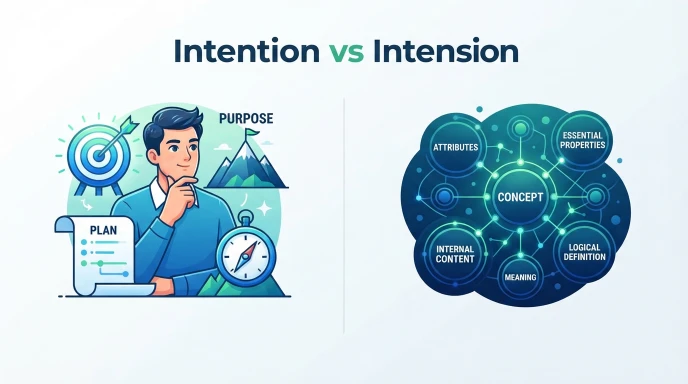
intention or intention is the correct spelling when you mean a plan, purpose, or aim; intention is a rare technical term used mainly in philosophy and logic. People often confuse these words.
Because they sound almost the same and differ by only one letter. Understanding the difference helps you choose the right word in emails, schoolwork, business writing, and everyday conversations.
The word intention is very common. You use it when talking about what someone plans to do or hopes to achieve. For example, “My intention is to help you.” Intension, however, has a specialized meaning. It refers to the qualities or characteristics that make up the meaning of a concept. It is not normally used as a substitute for intention.
This guide explains, their meanings, origins, spelling differences, common mistakes, and everyday uses. You will also learn which spelling to use in American, British, and international English.
Quick Answer:Intention or Intension
Intention is the correct spelling for a plan, purpose, aim, or reason for doing something.
Intension is a different and uncommon technical word used in philosophy, logic, and semantics.
| Word | Meaning | Example |
| Intention | A plan, purpose, or aim | My intention is to finish the work today. |
| Intension | The qualities that define a concept | The intension of a term can be studied in logic. |
Quick rule: If you mean “what someone plans or wants to do,” use intention.
Definition and Meaning of Intention or Intension
The words intention and intension have different meanings, even though they look and sound similar.
Intention: Simple Meaning
Intention means a plan, purpose, aim, or goal.
For example:
- Her intention was to apologize.
- I have no intention of leaving.
- His intention is to start a business.
- What was your intention when you sent that message?
The word is common in everyday English.
Intension: Simple Meaning
Intension is a specialized noun. In philosophy, logic, and semantics, it refers to the set of qualities or characteristics that define a concept or term.
For example:
The intention of a concept describes the properties associated with it.
This meaning is much less common than intention.
Context and Usage
Use intention when discussing:
- Plans
- Goals
- Purposes
- Motives
- Future actions
- What someone means to do
Use intention only when discussing a technical subject where the term has its specialized meaning.
The Origin of Intention or Intension

Intention comes from the Latin word intentio, meaning “a stretching,” “purpose,” or “intent.” It entered English through Old French and developed into the modern meaning of a plan, purpose, or aim.
Intension has a related history. It also comes from Latin intensio, connected with the idea of stretching or extending. Over time, it developed a specialized meaning related to the qualities or content of a concept.
The spelling difference exists because the two words developed along different paths and gained different meanings.
Although they are related historically, intention became the normal English word for a person’s plan or purpose. Intension remained mainly a technical term.
British English vs American English Spelling
There is no major BritishifAmerican spelling difference between intention and intension.
Both American English and British English use:
- intention for a plan or purpose
- intension for its specialized technical meaning
Comparison Table
| English Variety | Correct Word | Example |
| American English | Intention | My intention is clear. |
| British English | Intention | My intention is clear. |
| Canadian English | Intention | Her intention was helpful. |
| Australian English | Intention | His intention was good. |
| Technical English | Intension | The intension of the term is important. |
So, unlike words such as color/colour or center/centre, intention does not change spelling between American and British English.
Which Spelling Should You Use?
For almost all everyday situations, use intention.
Use Intention When:
- Talking about a plan
- Explaining someone’s purpose
- Describing a goal
- Discussing someone’s motives
- Writing emails
- Writing essays
- Posting on social media
- Writing business documents
Example:
My intention was to make the process easier.
Use Intension When:
You are writing about a specialized topic such as:
- Philosophy
- Logic
- Semantics
- Linguistics
- Conceptual analysis
Example:
The intension of the concept includes its defining properties.
Best Advice
If you are unsure, intention is almost certainly the word you need.
Common Mistakes with Intention or Intension
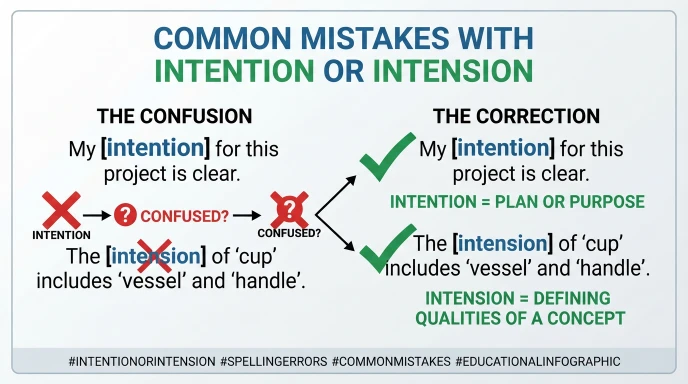
Because the words are very similar, spelling mistakes are common.
Mistake 1: Using Intension for a Plan
❌ My intension is to study tonight.
✅ My intention is to study tonight.
Mistake 2: Using Intention in a Technical Definition
If you are specifically discussing the qualities that define a concept, intension may be the correct technical term.
Mistake 3: Assuming They Are Different Spellings
They are not simply British and American versions of the same word. They are two different words with different meanings.
Mistake 4: Confusing Intention with Attention
Intention means a plan or purpose.
Attention means focus or notice.
❌ Thank you for your intention to this matter.
✅ Thank you for your attention to this matter.
Intention or Intension in Everyday Examples
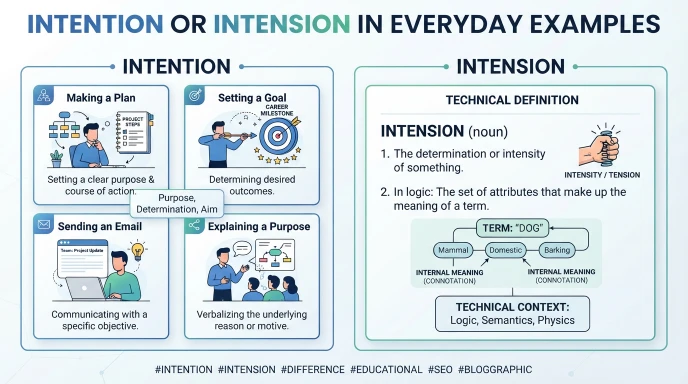
The word intention appears frequently in everyday English.
In Emails
My intention is to complete the report by Friday.
I had no intention of causing confusion.
In News Writing
The company said its intention was to expand its services.
On Social Media
My intention was only to help.
Good intentions can lead to positive results.
In Formal Writing
The intention of this policy is to improve workplace safety.
In Academic Writing
The author’s intention was to highlight the problem.
Technical Example Using Intension
The intention of the term can be examined through its defining characteristics.
This last example is much more specialized and is unlikely to appear in normal conversation.
Intention or Intension: Google Trends & Usage Data
Search interest strongly favors intention because it is a common English word used in everyday communication.
People commonly search for intention when they want to understand:
- Someone’s intentions
- Good intentions
- Future plans
- Personal goals
- The meaning of an action
- The phrase “intention to”
Intension receives far less everyday attention because it belongs mainly to technical fields such as philosophy, logic, and semantics.
Search patterns can also vary by country and context. In general English writing, intention is the expected choice in the United States, United Kingdom, Canada, Australia, and other Englishifspeaking regions.
For current searchifvolume figures, Google Trends should be checked for the specific country and date range because search interest changes over time.
Intention vs Intension: Comparison Table
| Feature | Intention | Intension |
| Meaning | Plan, purpose, or aim | Defining qualities of a concept |
| Commonness | Very common | Rare |
| Everyday English | Yes | No |
| Business writing | Yes | Rarely |
| Academic writing | Yes | Sometimes |
| Philosophy | Yes | Yes |
| Logic | Sometimes | Yes |
| Social media | Yes | Rare |
| Standard spelling for a plan | Yes | No |
FAQs About Intention or Intension
Q1. What does intensional mean?
Intensional describes something related to the meaning or defining qualities of a concept, especially in logic, philosophy, and semantics.
Q2. What is an example of intension?
An example of intension is the qualities that define the concept “bird,” such as being an animal with feathers, wings, and a beak.
Q3. What is the difference between intention and manifestation?
Intention is what you plan or want to achieve, while manifestation refers to something becoming real, visible, or expressed as a result.
Q4. How do you spell intension?
The correct spelling is intension: IifNifTifEifNifSifIifOifN. It is a specialized word and is different from intention.
Q5. What is the difference between intention and intension?
Intention means a plan or purpose, while intension means the defining qualities or meaning of a concept in technical contexts.
Q6. How do we spell intention?
The correct spelling is intention: IifNifTifEifNifTifIifOifN. It means a plan, purpose, aim, or goal.
Q7. What does intention mean?
Intention means a plan, purpose, or aim behind an action, such as “My intention is to help.”
Q8. What is another word for “intention”?
Common synonyms for intention include purpose, aim, goal, plan, objective, motive, and intent.
Conclusion
Intention is the correct word in almost every everyday situation when you mean a plan, purpose, aim, or goal. For example, “My intention is to help” clearly describes someone’s purpose. Intension is also a real word, but it has a much narrower meaning. It is mainly used in philosophy, logic, semantics, and other technical discussions to describe the qualities or characteristics associated with a concept.
There is no British English versus American English spelling difference between these words. Both varieties use intention for plans and purposes and intention for its specialized technical meaning.
If you are writing an email, essay, article, business message, or social media post and want to describe someone’s purpose, choose intention. Remember the simple rule: a plan or purpose = intention; a technical concept’s defining qualities = intention.

I’m James Mitchell, an English language and grammar writer at Grammwise. I enjoy helping readers understand confusing words, spelling differences, grammar rules, and everyday English usage. My goal is to make English simple, clear, and easy to use with practical examples and straightforward explanations.




2 thoughts on “Intention or Intension: Which Spelling Is Correct?”