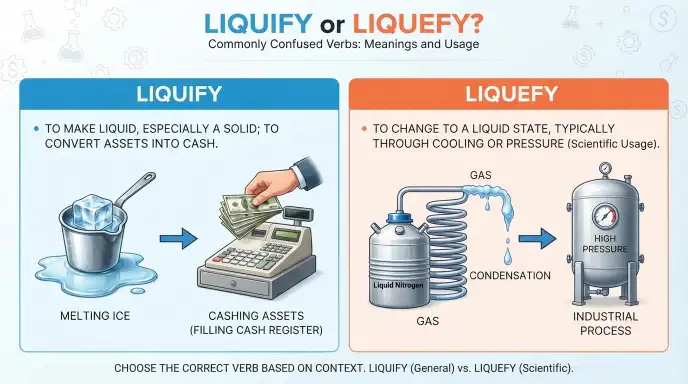
Liquefy is the correct spelling when you mean “to make something liquid,” while liquify is a common but different word with specific uses. These words are easy to confuse because they sound similar and both relate to changing something into a liquid form. However, they are not always interchangeable.
People often search for “liquify or liquefy” because the two spellings look almost the same. The confusion becomes greater when writing formal English, science content, or everyday sentences. Knowing the difference helps you choose the right word and avoid spelling errors.
Liquefy is commonly used when a solid or gas changes into a liquid state. For example, heat can liquefy a solid. Liquify, on the other hand, is mainly used in modern contexts for making something liquid or for the name of an image editing effect.
Understanding the difference is simple once you know the meaning and context of each word. This guide explains their definitions, origins, spelling differences, common mistakes, and everyday usage.
Quick Answer liquify or liquefy
Liquefy is the standard word for changing something into a liquid state.
Liquify is also a real word, but it has more limited uses and is often associated with making something liquid or with image editing software.
Examples:
- Heat can liquefy the metal.
- The gas was liquefied under pressure.
- She used the Liquify tool to edit the photo.
Definition and Meaning of Liquify or Liquefy
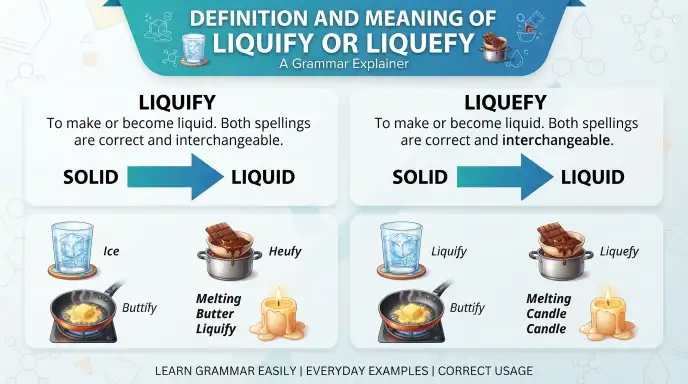
Liquefy
Liquefy means to change a solid or gas into a liquid.
Simple meaning:
To make something liquid.
Example:
The heat will liquefy the wax.
The word is common in science, chemistry, cooking, and technical writing.
Liquify
Liquify can also mean to make something liquid, but it is less common in this general sense.
It is especially familiar in modern digital contexts. For example, Liquify is the name of an imageifediting tool that can distort or reshape parts of a picture.
Example:
He used the Liquify tool to adjust the shape of the image.
Are Liquify and Liquefy the Same?
They can have overlapping meanings, but they are not equally common in every context.
| Word | Main meaning | Common context |
| Liquefy | Make something liquid | Science, chemistry, formal writing |
| Liquify | Make liquid; also distort an image | General use, software, digital editing |
The Origin of Liquify or Liquefy

Liquefy comes from Latin roots connected with liquid and the idea of making something fluid.
The word developed through French and English and became established in English as liquefy.
Liquify developed later as a variant formed from liquid with the common English suffix ifify, which means “to make or become.”
The different spellings exist because English often creates related words in more than one way. Over time, liquefy became the more established spelling for the scientific meaning, while liquify gained some separate modern uses.
British English vs American English Spelling
There is no major BritishifversusifAmerican spelling difference between these words.
Both British and American English commonly use:
- liquefy
- liquefied
- liquefaction
Liquify is also found in both varieties of English, especially in specific modern or technical contexts.
Comparison Table
| Meaning | British English | American English |
| Make something liquid | Liquefy | Liquefy |
| Past tense | Liquefied | Liquefied |
| Noun form | Liquefaction | Liquefaction |
| Imageifediting tool | Liquify | Liquify |
So, this is not mainly a UK vs US spelling issue. The correct choice depends more on meaning and context.
Which Spelling Should You Use?
For most formal writing, liquefy is the safer choice when you mean “to turn into a liquid.”
Use Liquefy for:
- Scientific writing
- Chemistry
- Physics
- Technical documents
- Formal writing
- General descriptions of changing something into liquid
Example:
The process can liquefy the gas.
Use Liquify when:
- Referring to a specific software feature
- Talking about image editing
- The context specifically uses the word “liquify”
- A source or product name uses that spelling
Example:
Open the Liquify filter to reshape the image.
For global English, liquefy is usually the clearest choice for the general physical process.
Common Mistakes with Liquify or Liquefy
One common mistake is using liquify when the intended meaning is the scientific process of turning something into liquid.
Heat will liquify the wax.
✅ Heat will liquefy the wax.
Another mistake is assuming that liquify is always wrong.
Liquify is never a word.
✅ Liquify is a real word, but its use depends on context.
Writers may also confuse the related forms.
The gas was liquefy.
✅ The gas was liquefied.
Remember the basic forms:
- liquefy
- liquefied
- liquefying
- liquefaction
Liquify or Liquefy in Everyday Examples
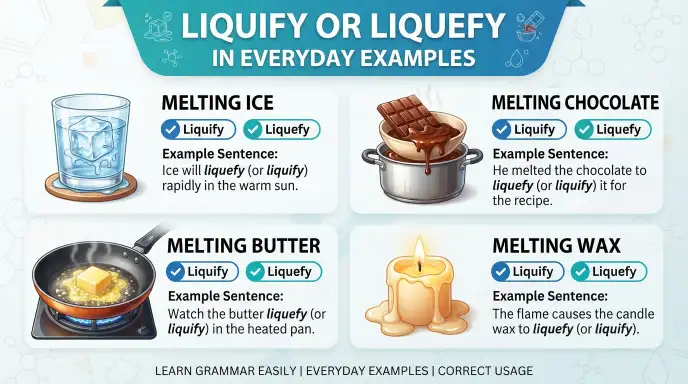
In Emails
The report explains how pressure can liquefy the gas.
In News
Scientists developed a new method to liquefy the material.
On Social Media
I used the Liquify tool to adjust the photo.
In Formal Writing
The process requires enough pressure to liquefy the gas.
In Science
Extremely low temperatures can cause gases to liquefy under suitable conditions.
These examples show why context matters when choosing between the two words.
Liquify or Liquefy : Google Trends & Usage Data
Search interest for “liquify or liquefy” usually comes from people checking spelling and word choice.
Liquefy has a strong connection with scientific and technical searches because it describes a real physical process. Liquify also receives attention because of digital imageifediting tools and software.
Usage can vary by country and context. Searches related to chemistry, gases, metals, and physical changes are more likely to use liquefy, while searches about photo editing may use Liquify.
Because search trends change over time, Google Trends data should be checked for a specific country and date range before using it as a current popularity measure.
Liquify vs Liquefy Comparison Table
| Feature | Liquify | Liquefy |
| Is it a word? | Yes | Yes |
| General meaning | Make liquid | Make liquid |
| Scientific use | Less common | Standard |
| Formal writing | Less common | Preferred |
| Image editing | Very common | Not normally used |
| British spelling | Liquify | Liquefy |
| American spelling | Liquify | Liquefy |
| Past tense | Liquified | Liquefied |
FAQs About Liquify or Liquefy
Q1. Which is the correct spelling, liquify or liquefy?
Liquefy is the standard spelling when you mean to turn something into a liquid.
Liquify is also a word, but it has more limited uses, including imageifediting contexts.
Q2. What is the meaning of liquify?
Liquify means to make something liquid or cause it to become liquid.
It can also refer to an imageifediting tool used to reshape or distort pictures.
Q3. What is the meaning of liquification?
Liquification means the process of changing a substance into a liquid state.
It can happen through changes in temperature, pressure, or other conditions.
Q4. What does “liquify” mean in chemistry?
In chemistry, liquify can mean to make a substance liquid, although liquefy is the more standard term.
For example, a gas may be liquefied by lowering its temperature or increasing pressure.
Q5. What is another word for liquify?
Another word for liquify is liquefy, especially when referring to changing a substance into liquid.
Depending on the context, “melt” or “dissolve” may also describe related processes, but they are not exact synonyms.
Q6. What is another name for liquefaction?
Another name for liquefaction is the conversion of a substance into a liquid state.
In specific scientific contexts, it can also describe the loss of soil strength caused by waterifsaturated ground during an earthquake.
Q7. What is liquid in chemistry?
In chemistry, a liquid is a state of matter with a definite volume but no fixed shape.
Liquids flow and take the shape of the container holding them.
Q8. What is liquefaction in simple terms?
Liquefaction is the process in which a substance changes into a liquid state.
For example, a gas can undergo liquefaction when it is cooled or compressed under suitable conditions.
Conclusion
Liquefy and liquify are both valid English words, but they are not always used in the same way. Liquefy is the standard spelling when you mean to change a substance into a liquid. It is especially common in science, chemistry, physics, and formal writing. For example, you can say that heat can liquefy wax or that pressure can liquefy a gas.
Liquify is also a real word, but it has more limited modern uses. It is especially familiar in digital image editing, where Liquify refers to a tool used to reshape images.
There is no major BritishifversusifAmerican spelling difference here. If you are unsure which word to use, choose liquefy for the physical process of becoming liquid. Use liquify when the context specifically calls for it, especially in imageifediting software. This simple distinction will help you write more accurately and naturally.

I’m James Mitchell, an English language and grammar writer at Grammwise. I enjoy helping readers understand confusing words, spelling differences, grammar rules, and everyday English usage. My goal is to make English simple, clear, and easy to use with practical examples and straightforward explanations.








1 thought on “Liquify or Liquefy: Which Spelling Is Correct?”